High-Velocity Cycling Accessories & Saddle Solutions
Verified commercial-grade saddle systems, ergonomic covers, and synchronized inventory SKUs curated for cross-border retailers, regional wholesalers, and performance brands.
Anatomy of Modern Bike Saddle Engineering: Materials & Biomechanics
Sourcing bike seats directly from Chinese production clusters requires deep technical discernment across shell mechanics, padding polymers, and rail metallurgy.
Baseplate Dynamics & Matrix Selection
The base structural substrate dictates cyclic flex fatigue and torsional stability. Standard saddles rely on unreinforced Polypropylene (PP), which exhibits irreversible sag after roughly 1,500 km. Tier-1 China factories deploy Nylon 6 (PA6) compounded with 15% to 30% short chopped glass fiber (GF) or carbon fiber (CF) filaments. This composite matrix maintains consistent deflection rates under a continuous 100 kg dynamic payload while dampening high-frequency road chatter across rough surfaces.
Padding Polymers & Pressure Attenuation
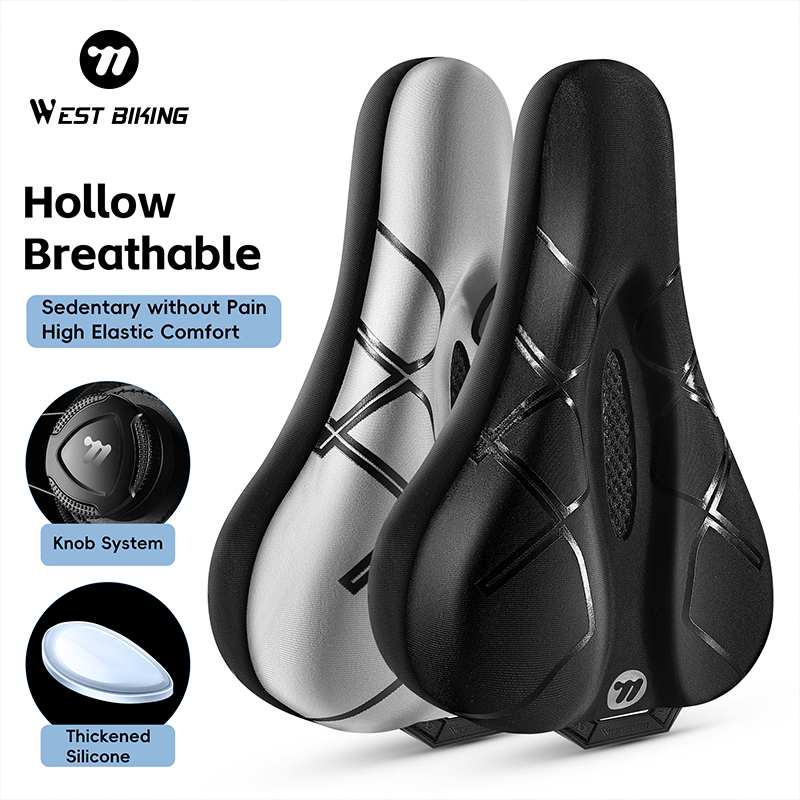
The interface material determines soft-tissue blood flow and ischial tuberosity (sit bone) comfort. High-rebound cold-cured Polyurethane (PU) foam with closed-cell density between 45–65 kg/m³ ensures uniform load-bearing without bottoming out. Premium touring and trekking variants integrate cross-linked viscoelastic polyurethane liquid gel or slow-recovery memory foams, reducing peak ischial pressure spikes by up to 38% compared to standard open-cell sponge cushions.
Rail Structural Alloys & Clamping Interfaces
Under ISO 4210-9 safety mandates, rails must survive aggressive static crush tests and multi-axial cyclic fatigue checks without brittle fracture. Sourcing options range from high-tensile boron steel (standard commercial fleets) to seamless 4130 Chromium-Molybdenum (Cr-Mo) tubing and hollow 6AL-4V Titanium. Top-tier racing saddles utilize 7x9mm oval unidirectional (UD) high-modulus carbon fiber rails with reinforced clamping zones to eliminate shear failure.
| Evaluation Parameter | Commercial Entry / Fleet Tier | Enthusiast / Mid-Market OEM | Pro Competition / Carbon Spec |
|---|---|---|---|
| Base Shell Composition | 100% Virgin Polypropylene (PP) | PA66 Nylon + 20% Short Glass Fiber | High-Pressure Compression Molded Carbon Fiber |
| Cushion Chemistry | Standard Die-Cut Open Cell Sponge | High-Density Injected PU Foam + Visco Gel | Additive 3D Printed Elastomeric Lattice (TPU) |
| Rail Profile & Material | 7mm Solid Carbon Steel (ED Painted) | 7mm Hollow 4130 Cr-Mo or Ti-Alloy Tube | 7x9mm Ovalized Unidirectional Carbon Composite |
| Skin Cover Construction | Stitched 0.6mm PVC Vinyl | Vacuum-Bonded 1.0mm Microfiber PU Leather | Seamless Thermo-Welded Anti-Abrasive Cordura/TPU |
| ISO 4210 Fatigue Rating | 100,000 cycles @ 700N dynamic load | 200,000 cycles @ 850N dynamic load | 300,000 cycles @ 1,000N dynamic load |
Emerging Procurement Trends Shaping Global Bike Seat Supply
B2B bicycle component procurement is evolving beyond simple unit pricing. Modern brand directors and supply chain architects prioritize automated customization, functional circularity, and platform versatility.
Digital Light Synthesis (DLS) & 3D Lattice Infill
The cycling sector is actively transitioning away from chemical foam molds toward photopolymer Liquid Interface Production. 3D-printed TPU lattice structures provide tunable zonal cushioning, allowing factories to engineer varying elastic modules within a single monolithic layer. Global brands leverage this technology to introduce custom anatomical zones that relieve pudendal nerve compression without tooling reinvestment.
Eco-Circular Glue-Free Ultrasonic Welding
European and North American environmental directives (such as Extended Producer Responsibility and EU Corporate Sustainability Due Diligence) are penalizing toxic solvent adhesives. Next-generation Chinese manufacturing facilities adopt clean ultrasonic mechanical interlocks and co-molding techniques. By eliminating chemical glues between shell, padding, and cover, end-of-life saddles can be dismantled and recycled cleanly without hazardous waste.
Smart Ergonomics & Sensor Integration
As electric commuting and high-mileage cargo bikes capture market share, saddle design intersects with electronics. Suppliers are producing seats with recessed rail-mounted quick-release cavities for smart brake sensing tail lights, integrated GPS tracking pods, and integrated saddle-bag docking. Factory pre-wiring and integrated rear safety reflectors streamline assembly for turnkey commercial fleets.
Why Partner with Yiwu PAVI Technology Co., Ltd.
Combining comprehensive supply chain depth in Zhejiang with rigorous European compliance protocols, PAVI removes the friction of sourcing multi-category cycling hardware.
TÜV Rheinland Assessed
Our operations, physical production lines, test equipment, and legal registration are independently inspected and verified on-site by TÜV Rheinland, ensuring complete supply chain transparency and verifiable integrity.
Low MOQ Agility
Eliminate dead-stock capital exposure. We support ready-to-ship orders starting from just 1 to 5 units per SKU, allowing new distributors to test diverse product lines across lights, saddles, tools, and bags in a single freight container.
Comprehensive OEM/ODM
From CAD mockups and precision injection mold opening to laser rail etching, silicone print branding, and bespoke multi-lingual retail card packaging, our design engineering team accelerates your private-label rollout.
Consolidated Multi-Category Logistics
Consolidate your bicycle accessories procurement under one invoice. We support FOB, CIF, EXW, and door-to-door DDP arrangements with customs duties managed for key North American and European ports.
Frequently Asked Procurement Questions (FAQ)
Direct operational answers addressing quality assurance, sampling, custom tooling, and international trade compliance.
How does PAVI verify bike saddle structural integrity and safety?
Every saddle batch undergoes rigorous testing in our laboratory against ISO 4210-9 safety mandates. This includes incoming polymer tensile tests, static shell load crush resistance up to 1,500 N, and dual-axis cyclic rail endurance tests running continuously for over 200,000 cycles. We also utilize digital height gauges and calibrated salt-spray chambers to verify rail coating anti-corrosion performance.
What is the standard procedure and cost for sample validation?
We provide rapid sample verification for all catalog items to validate mold accuracy, skin grain texture, and packaging before committing to production volumes. Catalog samples dispatch within 48 to 72 hours. Custom private-label samples featuring pad-printed branding or bespoke surface texturing are delivered within 7 to 12 business days.
What payment mechanisms and international trade terms are supported?
We accommodate commercial terms designed for secure international trade, including T/T, irrevocable L/C at sight, D/P, D/A, Credit Card, PayPal, Western Union, and Escrow. Multi-currency settlement is supported across USD, EUR, JPY, CAD, HKD, and CNY. Shipping terms encompass FOB Ningbo/Shanghai, CIF, EXW, CIP, DDP, and DDU door-to-door express delivery.
Can you support customized shell tooling and ergonomic shapes?
Yes. Our engineering division manages ODM projects from STEP/IGES files. We build precision aluminum or steel injection tooling for nylon composite shells, design custom PU injection foam densities, and stamp proprietary rail brackets. Tooling lead times range from 25 to 35 days from finalized CAD sign-off to first shot sample submission.
Ready to Scale Your Bicycle Seat & Accessories Portfolio?
Connect with our technical export engineering desk today. Access factory-direct wholesale tiers, complete ISO test dossiers, high-resolution media packages, and end-to-end OEM execution.