IPX7 Submersible
Matches on this page are highlighted. No match? You will be taken to the full product catalog.
Technical Sourcing Guide, OEM/ODM Engineering Capacities, and Global Distribution Insights
Engineered for all-weather touring, urban commuting, and bikepacking expeditions. Review our verified top-export items manufactured under ISO & TÜV quality standards.
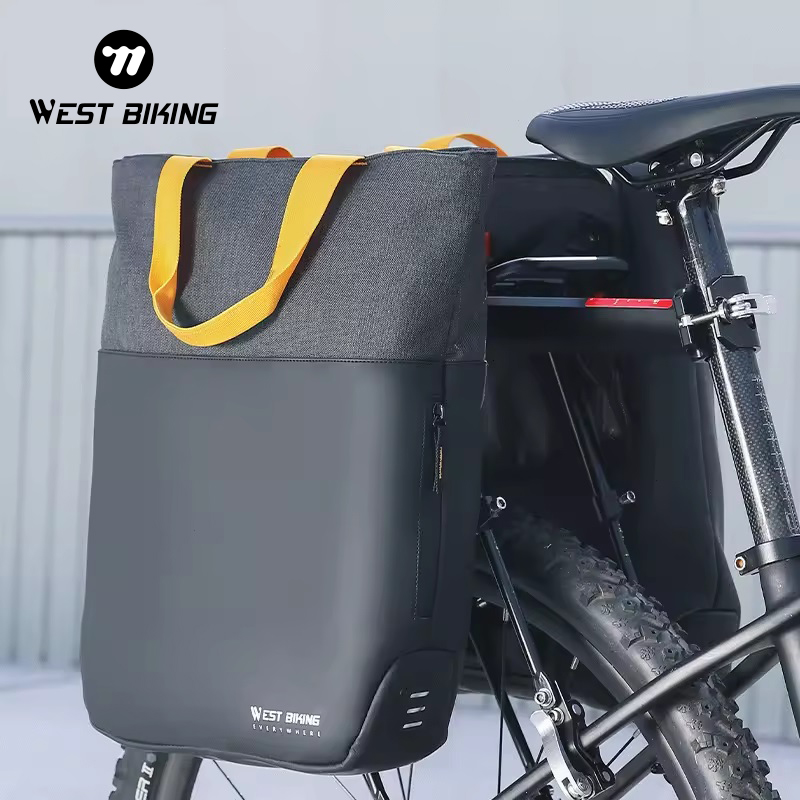
Combining proprietary high-frequency welding technology with agile supply chain orchestration to minimize inventory overhead for international distributors.
Unlike traditional needle-stitched bags coated with temporary DWR chemicals, our cleanroom workshops utilize High-Frequency Radio Frequency (RF) and Ultrasonic Welding. This process fuses thermoplastic polyurethane (TPU) and polyvinyl chloride (PVC) laminates at a molecular level, establishing impermeable, seam-free junctions rated to IPX6 and IPX7 waterproof ratings.
We eliminate cash flow constraints for retail chains and DTC brands. Ready-to-ship catalog items maintain flexible minimum thresholds starting from 1 to 5 pieces for cross-category sample verification. B2B buyers can consolidate handlebar packs, panniers, lights, and tools within a single container bill of lading (BOL), dramatically reducing landed freight overhead.
Every batch adheres to stringent incoming material analysis (tensile pull tests, denier yarn consistency, UV fastness) followed by automated leak detection. Verified onsite by Alibaba.com and assessed by TÜV Rheinland, our operations uphold complete audit transparency with complete REACH, RoHS, and California Proposition 65 chemical compliance.
A comprehensive analysis of mechanical structures, emerging polymers, and macro supply-chain shifts impacting wholesale procurement managers through 2026–2030.
Global regulations like the EU Corporate Sustainability Due Diligence Directive are pushing brands away from bonded PVC-polyester composites. Future procurement focuses on Mono-material Thermoplastic Polyurethane (TPU) architectures. Using identical polymers for outer shells, inner structural stiffeners, and webbing anchors allows end-of-life cyclability without toxic chemical delamination.
Gravel racing and long-distance ultra-endurance events have altered the geometry of bike cargo. Bulky, boxy panniers are transitioning to form-fitting frame triangles and under-seat stabilization rails. Modern designs incorporate low-drag roll-top closures, integrated air-purge release valves, and laser-cut MOLLE lash points capable of handling off-road vibration.
The convergence of e-mobility and touring is accelerating demand for "powered bags." Next-generation top-tube and handlebar bags integrate Qi-standard induction charging conduits, vibration-damped battery cells, and IPX8 pass-through cable glands. This lets riders power cycle-computers and telemetry lights directly from frame-integrated reserve packs.
Velcro strapping is being superseded by modular mechanical clips. High-tensile composite brackets engineered from glass-fiber reinforced nylon allow instantaneous snap-on attachment to fork blades, handlebars, and seat stays. These mechanical quick-release mechanisms eliminate frame paint abrasion and ensure rock-solid stability across rough terrain.
When evaluating Chinese manufacturing partners for waterproof cycle luggage, corporate buyers must balance surface-level cosmetic finish against internal molecular bonding. The failure mode of cheap bike bags rarely occurs across the flat face of the textile; it manifests at load-bearing points under dynamic stress: the handlebar head-tube stabilizer straps, the seatpost clamping winglets, and the pannier rack hook mounts.
At Yiwu PAVI Technology, we eliminate structural detachment through automated high-frequency die welding. By calculating precise dielectric loss factors for varying fabric thicknesses (such as 420D TPU vs 840D heavy-duty ripstop nylon), our automated machinery applies calibrated thermal pressure that reorganizes polyurethane chains across mating surfaces. The result is a monolithic joint with tear strengths exceeding the base textile itself. Furthermore, airtight construction necessitates bidirectional air valves: without a mechanical purge valve, roll-top dry bags trap high internal volumes, restricting roll tightness and destabilizing small-clearance frame cockpits.
Essential answers regarding tooling, testing criteria, MOQ scalability, and shipping logistics.
Our in-house laboratories verify waterproof performance via dual protocols. For IPX6 compliance, products are subjected to high-pressure oscillating water jets (100 liters per minute at 100 kPa pressure across 3 meters) for a minimum of 3 minutes. For IPX7 immersion certification, the bags are pressurized with pneumatic air meters to detect microscopic weld fissures, then fully submerged under 1 meter of water for 30 minutes. Zero fluid ingress across electronic chambers or internal compartments is required for final batch clearance.
Yes. We provide complete ODM engineering support. Our industrial design team works directly from STEP, IGES, or CAD schematics to develop custom aluminum high-frequency welding dies, injection-molded quick-release brackets, and structural internal skeletons. Tooling turnaround typically spans 14 to 21 business days, followed by immediate rapid 3D prototyping and functional sample production for physical trail testing.
For ready-to-ship baseline inventory, orders dispatch within 3 to 7 business days with low MOQs starting from 2 to 5 units. For bespoke OEM branding—including silk-screen printing, reflective thermal-transfer branding, sonic-welded rubber badges, and customized retail color-box packaging—standard production runs require an MOQ of 300 to 500 units per SKU, with production lead times stabilized between 25 to 35 calendar days following pre-production sample sign-off.
We handle extensive commercial export documentation for seamless customs clearance in the European Union, North America, Oceania, and Southeast Asia. We supply full MSDS and UN38.3 test protocols for integrated-battery packs or lighting components, alongside complete material declaration certificates verifying absence of restricted plasticizers, polycyclic aromatic hydrocarbons (PAHs), and harmful fluorinated chemistries (PFAS/PFC-free).
We accommodate a wide array of internationally recognized Incoterms including EXW, FOB Ningbo/Shanghai, CIF, CIP, DDU, and end-to-end DDP (Delivered Duty Paid) via ocean, rail, and air express channels. Supported payment rails include Wire Transfer (T/T), Irrevocable Documentary Letters of Credit (L/C at sight), PayPal for prototyping batches, and Alibaba Trade Assurance escrows to guarantee transactional security.
Connect with our technical sales division to receive engineering drawings, swatch libraries, certified compliance reports, and full volume pricing tier documentation.
Get Catalog