A flat tire rarely arrives at a convenient moment. It can happen beside a quiet road, in a parking lot, or halfway through a commute. A Mini Bike Pump gives riders a compact way to restore pressure and continue, rather than walking a bike home. Small tool. Real reassurance.
The PeopleForBikes 2023 U.S. Bicycling Participation Report estimated that 112 million Americans rode a bicycle at least once in 2022. That broad participation includes casual rides, commutes, and longer trips, where a pressure check or puncture can quickly become practical trouble. A mini pump fits in a jersey pocket, saddle bag, or frame mount. Its value is clearest when the nearest repair shop is miles away. It is not magic, though: compact pumps may require more strokes than a floor pump, and valve compatibility matters.
Calvin Jones, Park Tool’s longtime technical educator, is a relevant source for practical bicycle-maintenance guidance. I cannot verify a verbatim quote from him specifically about mini pumps, so I will not invent one. The sound takeaway is straightforward: choose a pump that matches your tire valve, learn how to use it, and test it before a ride. A few practice strokes at home reveal awkward fittings and loose connections. That small check can prevent a frustrating roadside surprise.
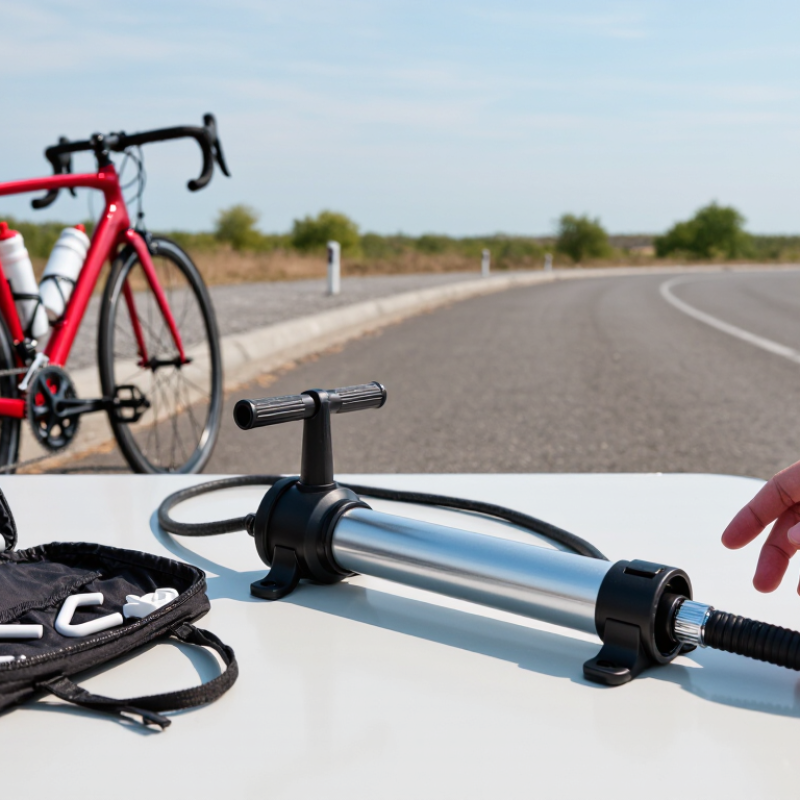
What a Mini Bike Pump Is and How It Works
A mini bike pump is a compact, hand-operated pump made to fit in a jersey pocket, saddle bag, or frame mount. Most models use a small cylinder, a sliding piston, and a head that connects to the tire valve. When you push the handle, the piston compresses air inside the cylinder. A one-way valve directs that air into the tire instead of letting it flow back. Pulling the handle draws in another breath of air. Then the cycle repeats.
The pump head must match the valve, or use an adapter. Some heads lock onto the valve with a lever; others screw on. Check the connection before pumping, since a loose fit can leak air or damage a valve stem. Each stroke adds only a small amount of air, so reaching riding pressure takes patience. Small, steady strokes usually work better than forcing the handle. The cylinder can warm up during a long inflation. That’s normal.
A mini pump is not just a smaller floor pump. Its short barrel moves less air per stroke, and many designs make high-pressure inflation slower. A built-in gauge can help, though tiny gauges may be hard to read on the roadside. I’d treat the pump’s pressure rating as a limit, not a promise of easy pumping. Practice using it at home once. A flat tire is a poor time to learn how its head locks on.
How Tire Pressure Affects Bicycle Performance
Why Do You Need a Mini Bike Pump?
How Tire Pressure Affects Bicycle Performance
Tire pressure changes how a bicycle rolls, grips, and responds to bumps. Too much pressure can make a ride feel harsh, especially on broken pavement. On loose gravel, a slightly lower pressure may help the tire stay in contact with the ground. Small changes matter.
The right setting depends on tire width, rider weight, terrain, and the tire’s construction. A narrow road tire usually needs more pressure than a wide mountain-bike tire. But higher is not always faster. On rough roads, an overly firm tire can bounce over small bumps instead of rolling smoothly. On the other hand, pressure that is too low can cause pinch flats or damage the rim. Check the tire and rim makers’ stated limits, and use a gauge when possible. The ideal number is not universal, and that can be frustrating.
A mini pump helps restore pressure after a puncture or a gradual leak, so a ride need not end at the roadside. It is small enough to carry, though some models take many strokes to inflate a tire. After pumping, check that the tire feels firm and sits evenly on the rim. A quick hand squeeze is useful, but it is not precise. I would not treat it as a replacement for a pressure gauge.
Why Do You Need a Mini Bike Pump? - How Tire Pressure Affects Bicycle Performance
| Typical Tire Type and Width |
Illustrative Pressure Range |
What Lower Pressure Can Do |
What Higher Pressure Can Do |
Why Carry a Mini Pump? |
| Road tire, about 25 mm |
70–100 psi |
May improve comfort and grip on rough pavement, but too little pressure increases pinch-flat risk with inner tubes. |
May feel firm and transmit more vibration; pressure above the tire or rim limit can be unsafe. |
Lets you restore pressure after a puncture repair or gradual air loss during a ride. |
| Road tire, about 28 mm |
60–85 psi |
Can help the tire conform to uneven surfaces, though excessive reduction can cause rim strikes or handling problems. |
Can reduce comfort and traction on rough roads; it does not always make a bicycle faster. |
Provides a practical way to reinflate after changing a tube away from home. |
| Gravel tire, about 40 mm |
30–50 psi |
Can increase comfort and grip on loose terrain; too little pressure can cause tire squirm or rim damage. |
May make the ride harsher and reduce grip on bumpy surfaces. |
Helps adjust pressure when a route changes from pavement to gravel, or after a repair. |
| Mountain-bike tire, about 2.3 inches |
18–30 psi |
Can improve traction and comfort on trails, but very low pressure raises the risk of tire burping or rim strikes. |
May reduce grip and make the bike bounce more over roots and rocks. |
Allows a rider to reinflate a tire on the trail after a puncture or pressure adjustment. |
Note: These ranges are general examples, not universal targets. Suitable pressure depends on total rider and bike weight, tire construction, tube or tubeless setup, rim limits, terrain, and conditions. Follow the pressure limits printed on the tire and use a gauge when accuracy matters.
When a Mini Pump Becomes Essential on a Ride
A mini bike pump earns its place when a ride takes you farther than a quick walk home. A slow leak can soften a tire miles from a shop; a sudden hiss may stop the ride altogether. On gravel, a small thorn can cause gradual pressure loss that is easy to miss at first. A pocket-sized pump can add enough air to reach home or a repair point. It is not magic.
A mini pump matters most on remote routes, long commutes, and rides where distance makes roadside help uncertain. After fitting a spare tube, inflate it before riding; a tire that feels firm under your thumb may still need more air. Mini pumps take more strokes than floor pumps, and they can be awkward with cold hands. I’ve also learned that a pump left loose in a pocket can disappear at the worst moment. Test it before leaving.
Tips: Check that the pump fits your valve, and practice using it at home. Carry it securely, along with a spare tube or repair kit. If pumping feels slow, pause and check the connection; rushing can let air escape.
Key Features to Consider in a Mini Bike Pump
A mini bike pump is most useful when a ride takes you beyond easy help. Its size matters, but a tiny pump that is awkward to use can turn a simple puncture into a long roadside delay. Small, but useful.
Check valve compatibility before buying. Some pumps fit Presta and Schrader valves directly; others need an adapter. A flexible hose can reduce pressure on the valve stem, especially when your hands are cold or the tire is nearly flat. That matters.
Think about your tires, too. Narrow road tires need higher pressure, so a pump designed for high pressure may suit them better. Wider tires need more air volume, and a small-volume pump can require many strokes. A pressure gauge helps, though tiny gauges can be hard to read in poor light. Without one, judging pressure by thumb feel is imprecise.
Look at the handle shape, barrel material, and mounting system. A frame mount should hold the pump firmly without rattling, while a compact pump should still leave enough room for a comfortable grip. There is a trade-off: lighter models can take more effort, and I would not assume the smallest option is the easiest. If possible, test a few strokes before choosing; shop-floor handling does not perfectly match a roadside repair.
Why You Need a Mini Bike Pump: Match It to Your Tires
Typical tire-pressure ranges vary by tire width, rider load, and riding conditions. Check your tire and rim limits; choose a pump that can reach the pressure you need.
A mini pump is useful for roadside repairs. For higher-pressure road tires, prioritize pressure capability; for wider gravel or mountain tires, a pump that moves more air per stroke can make inflation quicker.
How to Carry and Use a Mini Bike Pump Effectively
A mini bike pump is useful when a tire loses pressure far from home. Its compact size makes it easy to carry in a jersey pocket, saddle bag, or secure frame mount. Before a ride, check that the pump fits your tire valve. A loose fit can waste air and make roadside repairs frustrating. I learned that the hard way. A short test at home can reveal a poor connection before you need the pump.
Tips: Keep the pump secured so it cannot rattle or rub against the frame. If it has a hose, check that the hose is not cracked. Carry a tire lever and spare tube too; a pump cannot fix every puncture.
When inflating, stop somewhere stable and move away from traffic. Remove the valve cap, attach the pump squarely, and hold the valve steady while pumping. Small pumps take more strokes than a floor pump, so use controlled movements rather than forcing the handle. Check the tire’s recommended pressure, usually printed on its sidewall, and use a separate gauge when available. Without one, press the tire gently and inspect its shape, but remember that this is only an estimate. A mini pump may feel slow. That is normal. Don’t over-tighten the valve connection; I have bent one by rushing.
Conclusion
A Mini Bike Pump is a compact, portable tool that lets cyclists add air to a tire when pressure drops during a ride. Keeping tires at a suitable pressure helps a bicycle roll smoothly, handle predictably, and avoid the sluggish feel of underinflated tires. Because air can escape gradually or a tire can lose pressure unexpectedly, having a pump nearby can make the difference between continuing a ride and walking the bike.
When choosing a mini pump, consider its size, weight, ease of use, compatibility with your tire valves, and how effectively it can inflate a tire. Before setting out, check that the pump is secure and that you know how to attach it correctly. If you need it on the road, connect it firmly to the valve and pump steadily, checking the tire as you go. With a little preparation, this small tool can provide useful peace of mind on everyday trips and longer rides.