Matches on this page are highlighted. No match? You will be taken to the full product catalog.
Choosing a reliable Bicycle Pump manufacturer in China takes more than comparing prices or browsing polished catalogs. Global buyers need evidence of product consistency, practical design, and dependable communication. A pump may look sturdy on a product page, yet its valve connection, gauge accuracy, or hose durability can tell a different story after repeated use. Details matter.
This guide explores manufacturers serving different needs, from compact hand pumps for repair kits to floor pumps designed for frequent workshop use. It considers materials, production capabilities, customization options, quality checks, and export experience. These points can help buyers prepare better questions before requesting quotations or samples. Ask how pressure readings are tested, which valve types are supported, and how packaging protects products during transport. A clear answer is useful; a sample is better.
Supplier claims still deserve independent review. Request product specifications, inspect samples under realistic conditions, and confirm that stated certifications apply to the exact model being purchased. A low quoted price may leave out important costs or quality details. And no supplier is perfect. Even a capable factory may need time to refine a design or resolve a communication gap. This overview aims to help global buyers compare options carefully and identify manufacturers whose products and processes fit their market, budget, and expectations.
China’s bicycle-pump manufacturing industry benefits from a broad bicycle supply chain, including metal machining, plastics molding, seal production, and assembly. The China Bicycle Association’s 2023 industry statistics reported 48.83 million bicycles produced by large-scale manufacturers. This figure describes bicycles, not pumps, so it should not be treated as a pump-market estimate. Still, it helps explain the scale of the surrounding supplier network.
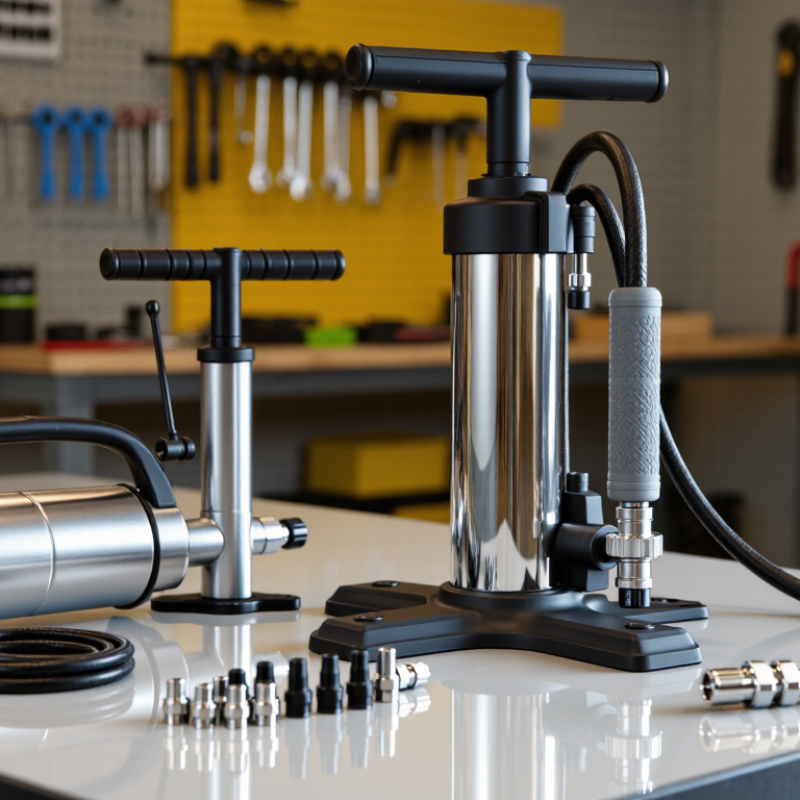
On a pump production line, details matter. A piston must move smoothly inside its barrel; a hose connection must resist leaks; and a pressure gauge needs repeatable calibration. Manufacturers commonly combine CNC-machined or formed metal parts with molded handles and rubber seals. Sample testing may check pressure retention, repeated strokes, and joint strength. Small failures show up quickly.
Scale is not everything. A high-volume factory can still struggle with inconsistent gauges or weak packaging, while a smaller workshop may offer closer inspection. Buyers should ask for documented test procedures, material specifications, and batch traceability. ISO 9001 can indicate a quality-management system, but certification alone does not prove pump performance. One point is easy to miss: published industry data rarely isolates bicycle pumps, so supplier-level evidence deserves careful review.
Bicycle pump gauges may display pressure in PSI, bar, or both. These reference points use the standard conversion 1 PSI = 0.0689476 bar; actual tire pressure requirements vary by tire and riding conditions.
Chinese manufacturers supply floor, mini, frame-mounted, and electric bicycle pumps for different riding and service needs. A floor pump suits home use, where a stable base and longer barrel make tire inflation faster. Models with a readable pressure gauge help riders avoid guessing, though gauge accuracy should be checked against a reference tool. Presta and Schrader compatibility matters. Small details matter.
Compact hand pumps fit a jersey pocket or saddle bag, but their short strokes require more effort. Some use a flexible hose to reduce stress on the valve stem. Frame pumps offer greater leverage while remaining attached to the bicycle. For workshops and frequent maintenance, electric pumps can reduce repetitive work; buyers should compare battery capacity, shutoff control, and heat during extended use. They are not always the lightest option.
When comparing suppliers, ask for pressure-range data, valve-head specifications, materials, and sample inspection records. Aluminum barrels can balance weight and durability, while reinforced plastic may lower cost. Check seals and threaded connections, since small leaks can make a pump frustrating. Product listings sometimes emphasize maximum pressure more than usable airflow. That deserves a closer look. A sample test on both narrow road tires and wider bicycle tires can reveal practical differences before a large order.
China Best Bicycle Pump Manufacturers for Global Buyers
How to Evaluate Bicycle Pump Manufacturers in China
A strong supplier is more than a low quotation. Grand View Research estimated the global bicycle market at USD 64.5 billion in 2023 and forecast 9.7% annual growth from 2024 to 2030. This signals a broad market, not guaranteed pump demand. Buyers should check whether a factory’s output and product range match their own sales plans.
Ask for samples across the pump types you intend to order. Test each with the same tire, valve, and pressure gauge; note pumping effort, leakage, and gauge consistency. Request written inspection records, material specifications, and details on how production batches are traced. Confirm minimum order quantities, sample lead times, packaging options, and how defects are handled. A polished sample is useful, but it cannot prove every batch will match it. That part needs checking.
Tips: Ask the supplier to test a sample after repeated use and share the results. Keep one sample as a reference for bulk production. Small details matter: a loose hose fitting can turn a good quotation into a costly delay.
For global buyers, leading Chinese bicycle pump manufacturers compete on dependable output, adaptable specifications, and export-ready production. Grand View Research estimated the global bicycle market at USD 64.4 billion in 2023 and projected an 8.2% compound annual growth rate through 2030. This report measures bicycles, not pumps, but it signals a large equipment ecosystem where reliable inflation tools matter. A growing market still rewards careful sourcing.
Buyers should compare cylinder material, seal design, gauge accuracy, and valve compatibility. Ask for measured output per stroke, pressure-test records, and sample performance on both Presta and Schrader valves. For floor pumps, inspect the base for wobble and the hose for kinking. For compact models, check whether the handle remains comfortable after repeated use. Small details count.
A manufacturer’s catalogue cannot replace a production audit. Request batch inspection criteria, spare-parts availability, and packaging tests for long-distance transport. Confirm that the supplied sample matches the intended production specification. A factory sample can still mislead. Pump-market data is less transparent than bicycle-market data, so buyers should avoid treating broad cycling forecasts as direct proof of pump demand. That distinction is easy to miss, and worth checking twice.
For global buyers, choosing a bicycle pump manufacturer means checking more than unit price. Confirm the factory’s export experience, production capacity, and ability to prepare clear packing lists and shipping documents. Ask how products are protected in transit; a crushed carton can turn a good sample into a costly problem. Small details matter. Request samples from regular production, not only a specially prepared display unit. Test the gauge, hose connection, and pump stability under repeated use. Ask for evidence of inspection procedures and agreed product specifications.
Tips: Put key requirements in writing, including materials, packaging, labeling, and acceptable tolerances. Agree on how defects will be recorded and handled before placing a large order. Keep a sample for comparison during production. This simple step can prevent arguments later.
Quality also depends on communication. Share realistic order forecasts and allow time for sample approval and production checks. A supplier should explain delays or changes early, not after goods are ready to ship. Buyers should do the same when specifications change. No checklist catches everything, and I would be cautious about treating one successful shipment as proof of consistent performance. Build the relationship through small, measurable orders, clear feedback, and regular review of delivery and quality records.
Product specifications below describe common bicycle-pump categories and typical market ranges, not verified specifications from any individual manufacturer. Actual performance, certifications, lead times, and export terms should be confirmed for each model and order.
| Product category | Typical pressure range | Common construction and features | Valve compatibility | Typical buyer and use case | Quality and export checks |
|---|---|---|---|---|---|
| Floor pump | Often rated around 120–160 psi (8.3–11 bar); check the model’s gauge and stated maximum. | Steel or aluminum barrel, stable base, long hose, and pressure gauge; dual-sided or adjustable pump heads are common. | Usually Presta and Schrader, either through an adjustable head or separate openings. | Retail, workshop, and home use; suited to repeated inflation and higher-pressure road tires. | Check gauge readability and calibration, base stability, hose and head leakage, handle strength, and carton protection. |
| Mini pump | Commonly rated from about 80 to 120 psi; compact models may require more strokes at higher pressures. | Compact aluminum, steel, or polymer body; may include a frame mount, flexible hose, or telescopic barrel. | Presta, Schrader, or both, depending on the head design. | Cyclists and distributors seeking a portable roadside repair accessory. | Test mounting security, cap and seal fit, repeated pumping, valve-head retention, and resistance to handling damage. |
| High-volume / MTB pump | Often around 30–60 psi, with a larger air volume per stroke than a high-pressure road-oriented mini pump. | Larger-diameter barrel or high-volume design; may use a flexible hose and frame bracket. | Usually Presta and Schrader compatibility, subject to the selected head. | Mountain-bike users who prioritize faster inflation of larger-volume tires over very high pressure. | Verify delivered air volume, seal durability, hose connection strength, and secure attachment to the bicycle. |
| Shock pump | Commonly rated up to approximately 300–600 psi (21–41 bar), depending on the model. | Small-volume, high-pressure design with a fine-reading gauge and a threaded connection; some models include a bleed valve. | Designed for compatible suspension air valves; not a substitute for a standard tire-pump head. | Suspension setup and service for air-sprung bicycle forks and rear shocks. | Confirm pressure accuracy, gauge legibility, bleed-valve operation, thread fit, and leakage under pressure. |
| CO₂ inflator | Pressure depends on cartridge size, tire volume, and inflation control; cartridges commonly contain 16 g or 25 g of CO₂. | Compact inflator head, often metal or polymer, with a cartridge interface and, on some designs, a flow-control feature. | Head compatibility varies; check whether it supports Presta, Schrader, or both. | Emergency roadside inflation where small size and speed are priorities. | Check cartridge-thread compatibility and controlled release. Confirm applicable carrier rules before shipping cartridges, which may be subject to transport restrictions. |
| Export and partnership review | Request rated pressure and test method for each model; do not compare maximum-pressure claims without consistent test conditions. | Agree on materials, color, logo or private-label requirements, packaging, spare parts, and approved product samples in writing. | Specify valve types, head design, included adapters, and any market-specific instructions. | Request a written quotation covering MOQ, sample charges, production lead time, payment terms, and delivery terms. | Confirm inspection criteria, batch traceability, packaging labels, shipping documents, warranty process, and destination-market compliance responsibilities before placing an order. |
Buyer note: Pressure figures are indicative product-category ranges, not a guarantee of performance. Request current model-level specifications, samples, and written quality requirements before confirming a purchase.
No. The cited market estimate covers bicycles, not pumps. It suggests a wider equipment market, but pump demand needs separate evidence.
Check cylinder material, seals, gauge accuracy, and valve compatibility. Ask for measured air output per stroke.
Try samples on both Presta and Schrader valves. Check for leaks and a secure connection. Small details count.
Set it on a firm surface and check for wobbling. Bend the hose gently to see whether it kinks.
Pump repeatedly and notice whether the handle stays comfortable. A short test may not reveal hand fatigue.
Not by itself. Request a sample from regular production and compare it with the agreed specifications. A sample can mislead.
Ask for inspection criteria, spare-parts availability, and packaging tests. Review packing lists and shipping documents before dispatch. Worth checking twice.
Put materials, labeling, packaging, tolerances, and defect handling in writing. Keep an approved sample for comparison. I may be overcautious, but one successful shipment does not prove consistent quality.
China has developed a diverse bicycle pump manufacturing industry, serving buyers with products for recreational cycling, commuting, and professional use. Chinese manufacturers offer several pump types, including compact hand pumps, floor pumps, mini pumps, and models designed for different valve systems and inflation needs. Understanding these options helps global buyers match product specifications to their customers and intended markets.
When evaluating suppliers, buyers should consider manufacturing experience, product consistency, material quality, customization capabilities, communication, and production capacity. Requesting samples and confirming inspection procedures can help assess whether a Bicycle Pump meets expectations before placing larger orders. Buyers should also clarify packaging, lead times, shipping arrangements, and after-sales support. Clear specifications and dependable cooperation can help build a practical long-term partnership and support smoother export operations.