Matches on this page are highlighted. No match? You will be taken to the full product catalog.
For wholesale buyers, choosing a Bike Pump supplier is a practical decision with consequences at every stage: product testing, packaging, shipping, and after-sales support. A pump may look sturdy on a catalog page. The real test comes beside a bicycle, where the gauge should be readable and the hose should reach the valve without twisting.
Grand View Research estimated the global bicycle market at USD 64.62 billion in 2023 and projected a 9.7% compound annual growth rate from 2024 to 2030. This is bicycle-market data, not a pump-specific sales forecast, but it signals a broad and growing product ecosystem. Buyers should still verify supplier claims against samples, inspection records, and clear specifications. No shortlist is perfect.
SILCA founder Josh Poertner is known for his work on tire pressure and cycling equipment. His practical guidance can be paraphrased this way: “Choose pressure for the tire-and-rider system, not by habit.” This is a paraphrase, not a verbatim quotation. It points to a useful buying principle: pumps need dependable gauges, compatible valve heads, and pressure ranges suited to their intended users. Ask suppliers for measurable details, not just polished product photos. Check carefully. Small inconsistencies matter. This guide compares China-based suppliers through product range, customization, quality control, communication, and wholesale readiness. Some evidence may be incomplete, so buyers should confirm critical claims before placing large orders.
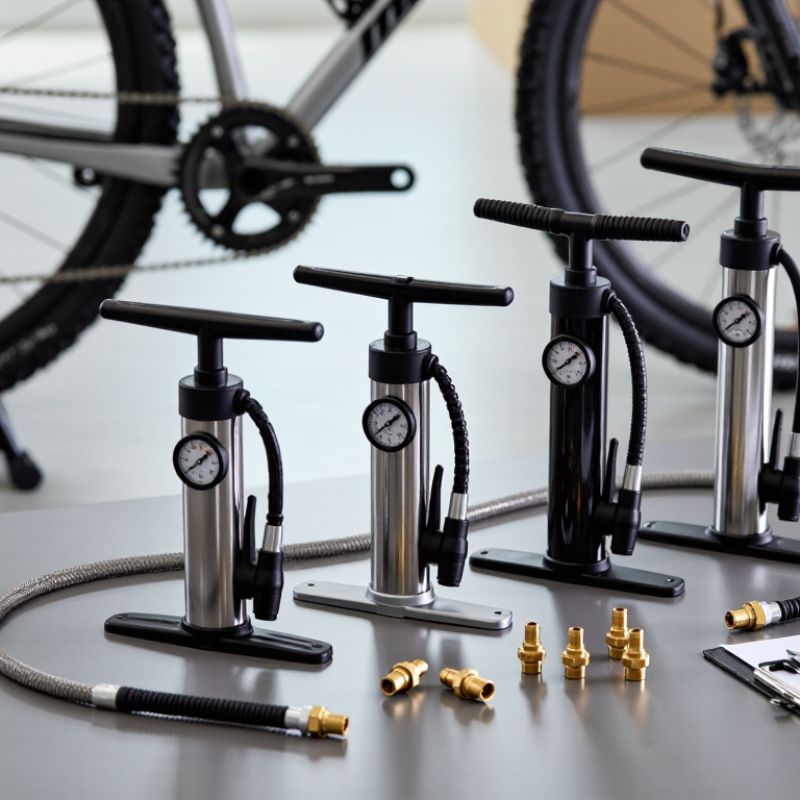
Wholesale buyers should match pump types to the riders and service points they supply. PeopleForBikes’ 2024 participation research estimated that 112 million U.S. residents rode a bicycle in 2023. That figure describes participation, not pump sales, but it signals varied riding needs. Fit matters.
A steel-barrel floor pump suits workshops and frequent home inflation; its stable base helps keep the pump steady. Compact hand pumps fit saddle bags and trailside repairs, while frame pumps offer touring riders convenient access. Electric pumps save effort, but buyers should check battery capacity, heat management, and charging compatibility before ordering. For wholesale assortments, confirm compatibility with Presta and Schrader valves, plus easy-to-read pressure scales.
Ask suppliers for gauge test records, cycle testing, spare seals, and carton dimensions. These details affect returns and warehouse costs. Low-cost gauges can drift; a sample inspection may reveal problems late. That risk is easy to overlook. Choose models by sales channel: shop counters need dependable floor pumps, while online bundles may benefit from compact pumps and clear instructions.
Choosing a bike pump supplier takes more than comparing unit prices. Ask for specifications covering barrel material, pressure gauge accuracy, valve compatibility, hose length, and handle design. Request samples from the same production line intended for your order. Check how firmly the hose connects and whether the gauge remains readable at different angles. Small details matter. A polished sample is useful, but it cannot prove every batch will match. Confirm how the supplier checks incoming materials and finished pumps, and ask for written inspection criteria.
Assess communication as carefully as product quality. A reliable supplier should answer technical questions clearly, explain production lead times, and identify what affects minimum order quantities. Request recent test records where available, and clarify how defects are documented and handled. Compare packaging dimensions and carton weight, too; they can change freight costs. Vague answers are a warning sign, though a delayed reply alone may have a reasonable cause. I would not treat one smooth call as proof of dependable service.
Tips: Test samples with both common valve types and a real bicycle tire. Record pumping effort, leakage, gauge readings, and any loose fittings. Ask for a pre-shipment inspection plan, then agree on acceptable defects in writing. Keep one sample as a reference. It may feel overly cautious, but resolving a mismatch after a large shipment is harder.
China Best Bike Pump Suppliers for Wholesale Buyers
China’s bike-pump suppliers are spread across several manufacturing regions, each with different strengths. Zhejiang, including areas around Ningbo and Taizhou, has established metalworking and plastic-molding networks. Many factories there produce floor pumps, compact hand pumps, and replacement fittings. Hubs matter. A nearby network of machining, coating, and packaging vendors can shorten sampling cycles, though supplier capabilities still vary.
In Guangdong, some manufacturers focus on product design, assembly, and export-oriented customization. Jiangsu suppliers may offer access to precision machining and established component makers. These are broad patterns, not guarantees. Ask for the factory’s actual production address and confirm whether key parts, such as gauges, hoses, and valve heads, are made in-house or sourced. Request samples and test pressure readings, connection fit, handle comfort, and carton protection. Small details count.
Tips: Send a clear specification sheet with target pressure, pump style, materials, and packaging needs. Ask for a sample from the same production line planned for your order. Compare inspection records, lead times, and defect-handling procedures, not just quoted prices. One easy-to-miss point: a polished sample may not reflect routine batch consistency. Check again.
Wholesale buyers should verify a bike pump supplier through records and product checks, not a polished catalog alone. Request current quality certificates, then confirm the issuing organization, validity dates, and covered production site. A certificate may not apply to every model. Ask for proof. Check whether test reports match the pump type, materials, and intended sales market.
Inspect samples for practical details: gauge readability, hose connection strength, valve compatibility, and stable floor-pump feet. Ask how the factory checks pressure accuracy and repeated-use durability, and request recent inspection records. Numbers can mislead. A clean sample does not guarantee consistent bulk production, so consider an independent pre-shipment inspection or a small trial order. Keep the criteria written down; otherwise, comparisons become subjective.
Production capacity needs the same scrutiny as product quality. Request monthly output figures, active order schedules, staffing levels, and lead times during peak season. If possible, compare stated capacity with machinery and recent production records. A supplier may have enough equipment but still lack trained operators or reliable component supply. That detail is easy to miss. Recheck timelines after approving samples, and agree on how defects, replacements, and delayed batches will be documented.
For wholesale buyers, the lowest unit quote is rarely the full cost. Ask suppliers in China to price several order tiers, listing packaging, spare hoses, gauges, and carton dimensions separately. Confirm whether sample fees can be credited toward a production order. Test pumps on both Presta and Schrader valves, then check gauge consistency over repeated strokes. Samples can mislead. Request a pre-production sample and written inspection points before approving bulk production. A small mismatch in valve heads or hose fittings can create avoidable returns.
Shipping plans need room for disruption. UNCTAD’s Review of Maritime Transport 2024 reported that Suez Canal container ship transits fell 67% year on year in early 2024. The World Bank’s 2023 Logistics Performance Index compares 139 economies and tracks factors including shipment timeliness and tracking. Ask for freight options based on carton volume, gross weight, destination, and delivery terms—not just an estimated arrival date. For a first order, split quantities across a trial batch and a later replenishment if cash flow allows. A buffer is sensible, but it ties up money; calculate that trade-off rather than guessing.
| Pump Type | Typical Wholesale Specification | Indicative FOB Price (USD/unit) | Typical MOQ | Sample Planning | Bulk Production Lead Time | Shipping and Order Planning |
|---|---|---|---|---|---|---|
| Floor pump | Steel or aluminum barrel, stable base, pressure gauge, dual-valve or convertible head; suitable for common Presta and Schrader valves. | $4–$10 | 300–1,000 units | Usually 1–3 weeks; sample and courier freight are commonly charged separately. | 30–45 days after sample and artwork approval. | Allow roughly 20–40 days by sea after departure, depending on destination and port. Confirm carton dimensions and units per carton before calculating freight. |
| Mini hand pump | Compact aluminum or reinforced-plastic body, frame-mount bracket, flexible hose or direct head, dual-valve compatibility. | $2–$6 | 500–2,000 units | Usually 1–3 weeks; request samples with the intended valve head and mounting bracket. | 25–40 days after specifications are confirmed. | Small cartons can suit consolidated sea freight. Plan about 20–40 days at sea, plus origin handling, customs clearance, and inland delivery. |
| High-volume track pump | Long barrel, larger chamber for higher air volume, reinforced base, gauge, and a secure hose connection. | $6–$14 | 300–1,000 units | Usually 1–3 weeks; check stability, gauge readability, and hose reach in the sample evaluation. | 30–50 days; larger or customized orders may take longer. | Bulky cartons can make volume-based freight significant. Obtain packed carton measurements and a destination-specific shipping quote before placing the order. |
| CO₂ inflator head | Aluminum or alloy inflator head with controlled-release mechanism; confirm thread compatibility and whether cartridges are excluded. | $1.50–$5 | 500–2,000 units | Usually 1–3 weeks; test operation with the cartridge format intended for the sales market. | 25–40 days after design and packaging approval. | Inflator heads without gas cartridges are simpler to ship. CO₂ cartridges are pressurized goods and may require restricted transport arrangements and separate carrier approval. |
| Rechargeable electric pump | Battery-powered compact pump with digital pressure display, charging cable, and preset-pressure function on some models. | $12–$30 | 300–1,000 units | Usually 2–4 weeks; verify battery capacity, charging method, operating instructions, and required market documentation. | 35–60 days; battery availability and compliance checks can affect timing. | Products containing lithium batteries are subject to carrier and route requirements. Confirm battery classification, documents, packaging, and destination rules before booking. |
| Replacement hose or pump head | Replacement accessory matched to a specified pump connection, valve type, hose length, and material. | $0.50–$4 | 1,000–5,000 units | Usually 1–3 weeks; test fit against the exact pump model or connection dimensions. | 20–35 days for standard parts; custom tooling or materials may extend lead time. | Often economical to ship with pumps in the same order. Confirm compatibility and packing method to avoid damage or mixing parts. |
| Order-planning reference | Compare like-for-like specifications, packaging, included accessories, inspection terms, and payment terms when evaluating quotations. | Prices above are indicative planning ranges, not live quotations. | MOQ varies by product, customization, and packaging. | Confirm sample cost, sample freight, and whether the sample charge is credited against a bulk order. | Start lead-time counting only after specifications, artwork, payment, and any required approvals are complete. | Request separate EXW, FOB, or delivered-cost quotations as needed. Transit estimates are indicative; final timing depends on route, season, customs, and carrier capacity. |
Planning note: Price, MOQ, sample timing, production time, and freight vary by specification, order quantity, packaging, and destination. Confirm current terms directly with prospective suppliers before committing to an order.
Review barrel material, gauge accuracy, valve compatibility, hose length, and handle design. Ask for written inspection criteria.
Try both common valve types on a real bicycle tire. Record pumping effort, leakage, gauge readings, and loose fittings. Keep one sample as a reference.
No. Ask for a sample from the planned production line and review recent inspection records. Even then, I would not call it certainty.
Zhejiang has metalworking and molding networks. Guangdong suppliers may focus on design and export customization, while Jiangsu offers access to precision machining. These are patterns, not guarantees.
Check the issuing organization, validity dates, and covered production site. Confirm that test reports match the pump model and materials. A certificate may not cover every product.
Ask how the factory checks pressure accuracy and repeated-use durability. Get defect criteria in writing, and clarify how replacements are handled. Small details matter.
Request monthly output, current order schedules, staffing levels, and peak-season lead times. Compare stated capacity with machinery and recent production records. Equipment alone proves little.
Compare carton dimensions and weight, along with packaging protection. Agree on a pre-shipment inspection plan. A small carton change can matter.
Choosing the right Bike Pump supplier in China begins with understanding the needs of your customers and the differences among floor, hand, mini, and other pump types. Wholesale buyers should compare suppliers by product range, customization options, communication, and experience serving bulk orders. China’s manufacturing regions may specialize in different product categories, so matching a supplier’s capabilities to your requirements can help narrow the search.
Before placing an order, verify product quality, relevant certifications, production capacity, and quality-control procedures. Request samples to assess construction and performance, and confirm pricing, minimum order quantities, lead times, packaging, and shipping arrangements in advance. A clear order plan that allows for sample review, production scheduling, and delivery time can reduce surprises and support a more reliable wholesale purchasing process.